Yes — manual osteopathy can help many people with sciatica. Sciatica is pain that travels from the lower back down through the buttock and leg, usually when the sciatic nerve is irritated. Manual osteopathy uses gentle, hands-on techniques to ease stiffness and improve mobility, which may help the leg pain settle.
Reviewed by Andrew Chan, Manual Osteopath — ISOMATIC Integrative Health Centre.
If you live in Vaughan or Woodbridge and sciatic pain is making it hard to sit, walk, or sleep, an assessment with a manual osteopath may help you understand what is irritating the nerve. At ISOMATIC’s Vaughan clinic, manual osteopathy is offered alongside physiotherapy and massage therapy, so your care is coordinated in one place.
Sciatica is not a diagnosis on its own — it is a pattern of symptoms. The sciatic nerve runs from the lower back, through the buttocks, and down each leg. When it is irritated or compressed, pain can travel along that path. Many people describe it as a sharp, shooting, or burning pain in the buttock and leg, sometimes with tingling or numbness. It often affects one side only.
Sciatica is often linked to the lower back — for example, a disc pressing on a nerve root, or stiffness in the pelvis and lower spine. Because the nerve runs through the pelvis and buttock, problems in the hips and sacroiliac joints can also play a role. That is why a manual osteopath assesses the whole lower body, not just the painful leg.
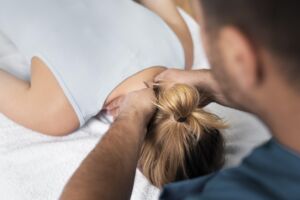
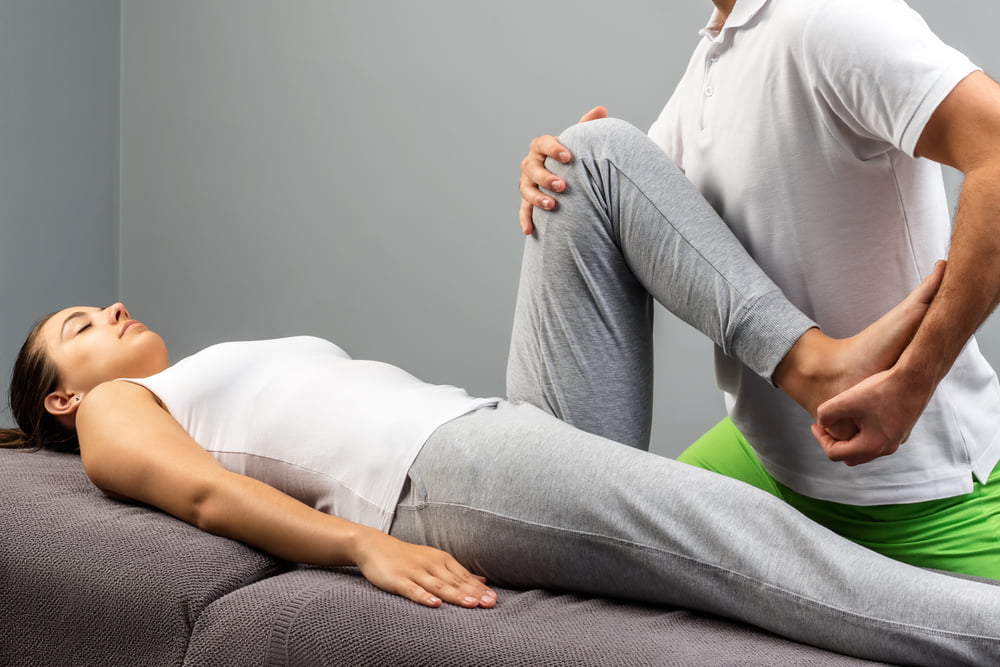
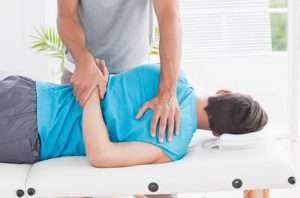
Manual osteopathy is a hands-on discipline. A manual osteopath uses gentle techniques — including soft-tissue work, joint mobilization, and stretching — to improve movement in the lower back, pelvis, and hips, and ease muscle tension around the sciatic nerve.
During a session, your osteopath may assess how your lower back, pelvis, and hips move, use gentle hands-on techniques to mobilize stiff joints and relax tight muscles — including the deep buttock muscles near the sciatic nerve — and suggest movement and stretching to support your progress between visits.
Many people find that this approach helps their leg pain ease as their back and pelvis move more freely. Staying mobile matters with sciatica — gentle movement is usually better than bed rest — and your osteopath can help you find activities that keep you moving.
What happens at your first visit?
Your first visit starts with a conversation and a hands-on assessment. Your manual osteopath will ask about your pain — where it travels, what makes it better or worse — as well as your medical history, your work, and what you have already tried. They will then assess how your lower back, pelvis, and hips move.
Treatment is usually gentle. Manual osteopathy does not involve forceful cracking or high-velocity adjustments. If hands-on treatment is appropriate, your osteopath will explain what they are doing and why. After the assessment, you will talk through a plan — how often to come in, what to expect, and what you can do at home. If your symptoms need a different kind of care, your osteopath will say so.
When should you see a manual osteopath for sciatica?
Consider booking an assessment if leg pain has lasted more than a few weeks, keeps coming back, or is limiting your walking, sitting, or sleep. Seek prompt medical care instead for new weakness in the leg, numbness in the saddle area, changes in bladder or bowel function, unexplained weight loss, fever with back pain, or pain after a serious fall. These can be signs that your sciatica needs medical assessment first.
When choosing a manual osteopath in Vaughan or Woodbridge, look for a practitioner who takes a full history, explains their findings clearly, and gives you a realistic sense of what treatment may — and may not — achieve. Sciatica often responds best to a combined approach: hands-on care, guided movement, and practical advice on daily activity.
At ISOMATIC, manual osteopathy is part of an integrative team, so your osteopath can coordinate with physiotherapists and massage therapists at the same clinic when that would help. The Vaughan clinic is located at 630 Aberdeen Ave, Unit 3, Woodbridge, ON L4L 5M4. Manual osteopathy is also offered at the Danforth clinic in Toronto.
Can osteopathy help sciatica?
Many people with sciatica find manual osteopathy helpful, particularly when stiffness in the lower back and pelvis is contributing to the nerve irritation. A manual osteopath assesses the lower back, pelvis, and hips, and uses gentle hands-on techniques to improve movement and ease tension. Results vary, and osteopathy is usually one part of a broader plan.
How long does it take for osteopathy to help sciatica?
There is no fixed timeline. Some people notice a change after a few sessions, while others benefit from a longer course of care, especially when the pain has been present for weeks or months. Your manual osteopath will reassess your progress and adjust the plan with you.
Is manual osteopathy safe for sciatica?
Manual osteopathy uses gentle, hands-on techniques and is generally considered a low-risk form of care for most people. Your osteopath will take a full history first and will not treat you if your symptoms suggest a condition that needs medical attention. Tell your practitioner about any medical conditions or past surgeries so your care can be planned safely.
If sciatica is limiting your life, an assessment is a good first step. Book Now at ISOMATIC’s Vaughan clinic in Woodbridge, or call 647-873-7556 to speak with the team and find a time that works for you.
Sources